01
Run a Thumbnail Down the Grain After Two Winters
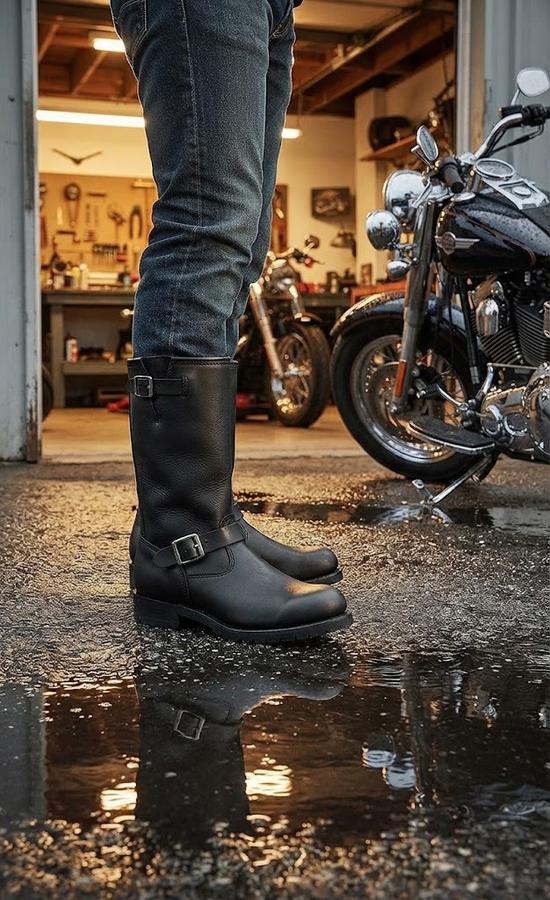
Full-grain hide takes the outermost, tightest-fibre layer, so the vamp creases instead of flaking, confirmed across two-plus years of owner reports.
Harness · Engineer · Side-Zip
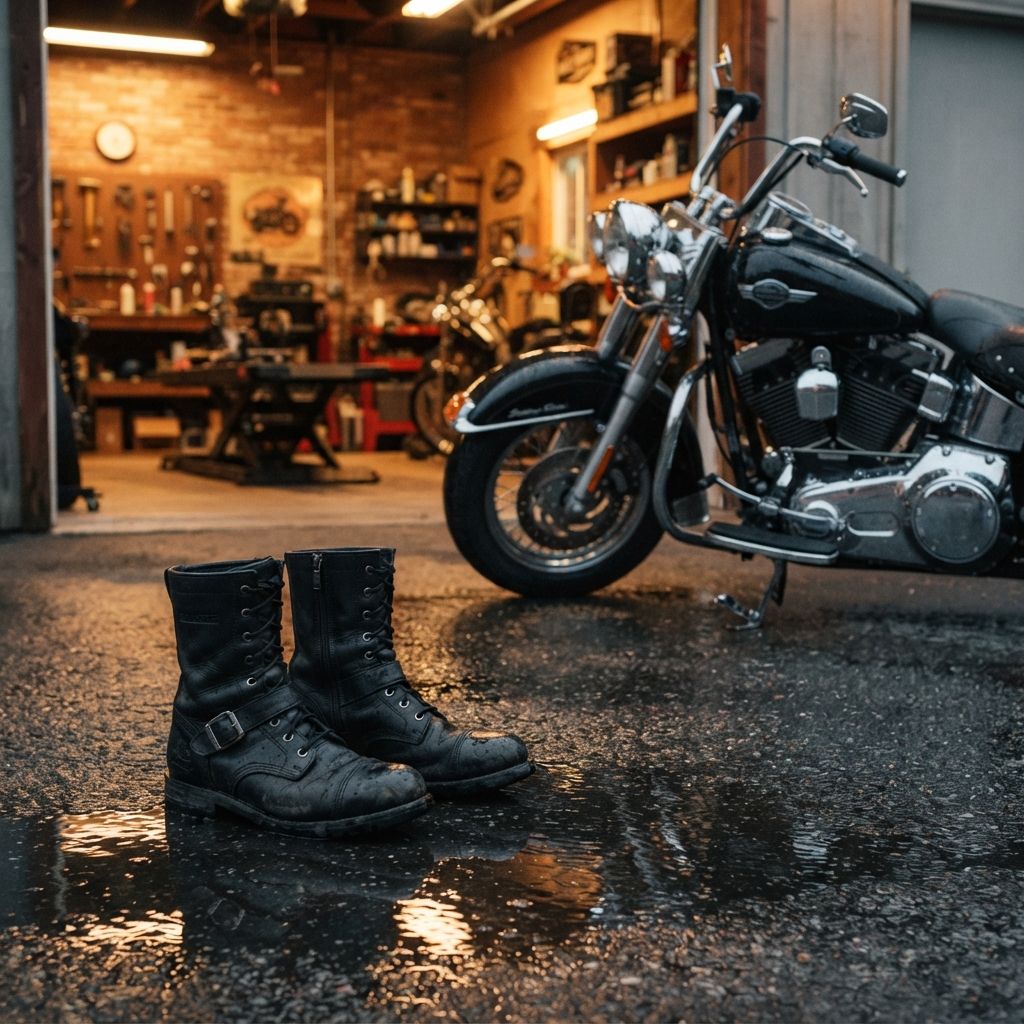
RIDETECS answers the 'leather' boot that cracks and peels inside 12 months: real full-grain hide on every build, at a 4.3 average from 5,291 verified reviews.
Riders replaced cracked veneer boots for what sits on this spec sheet: full-grain hide, a stitched welt, a 30-day return.
01
Full-grain hide takes the outermost, tightest-fibre layer, so the vamp creases instead of flaking, confirmed across two-plus years of owner reports.
02
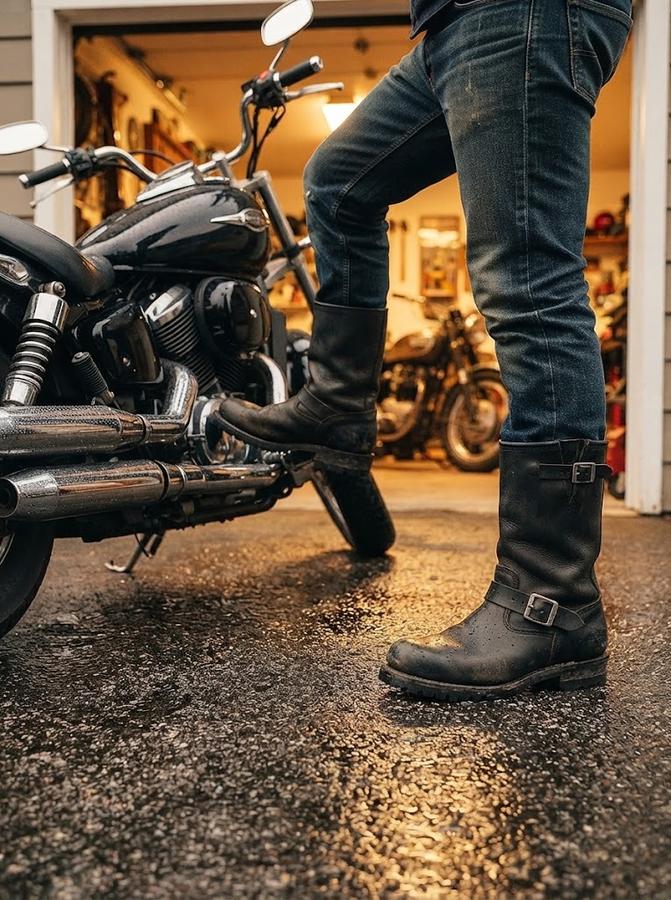
A welted sole comes off and goes back on, so a local cobbler swaps worn tread after hard commuting seasons instead of you buying a second pair.
03
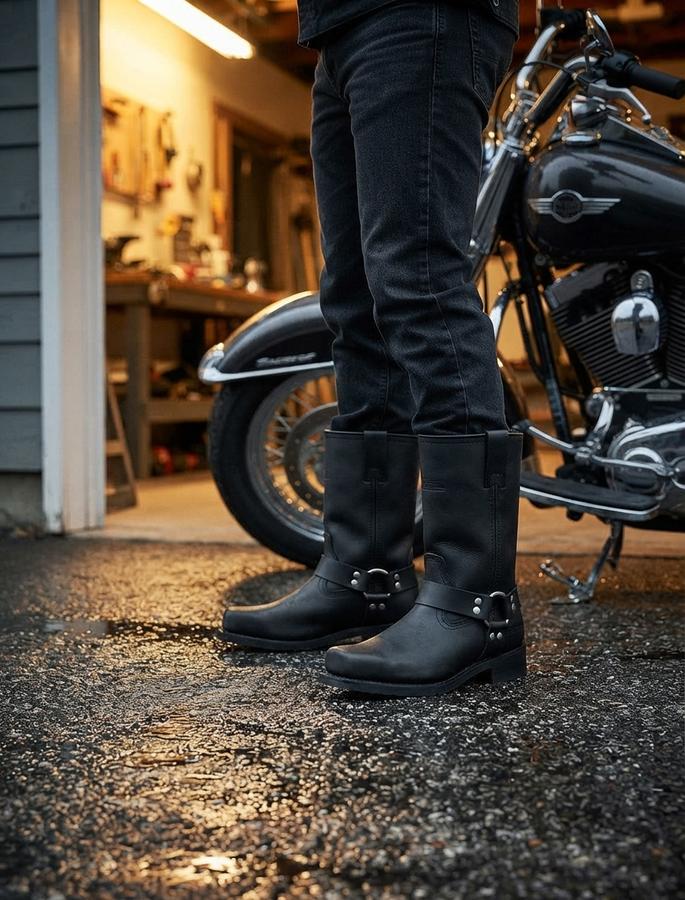
That boot averages 4.4 stars, ridden on daily commutes with the ankle strap set once, not one weekend a season.
04
The oil-resistant rubber outsole grips wet pavement and light engine spills at the pump, where a smooth leather sole skates.
05
Pull the side zip and the boot drops off in seconds after a two-hour highway leg, no sitting on the step picking at knots.
06
Verified reviews flag narrow sizing on some builds. Measure your calf, then ship the pair back inside the 30-day return window.
Every build shares the hide and sole compound; shaft height from 7 in to 16 in, closure, and calf adjustment separate them.
Zip a 16-inch shaft closed over a thick riding sock in about four seconds, then ride four hours with full-grain oiled leather between hot pipes and your shin. The full-length side zipper opens the shaft wide enough to clear the sock instead of forcing your heel through a fixed collar, and the oil-resistant outsole handles the wet pump island you park on. Where a bonded veneer boot cracks at the ankle crease inside two winters, this hide scuffs and darkens instead. 969 verified reviews average 4.3 stars, and the retailer's 30-day return window covers a shaft that binds.
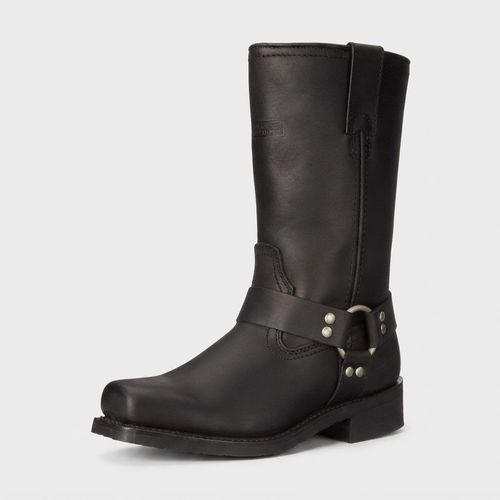
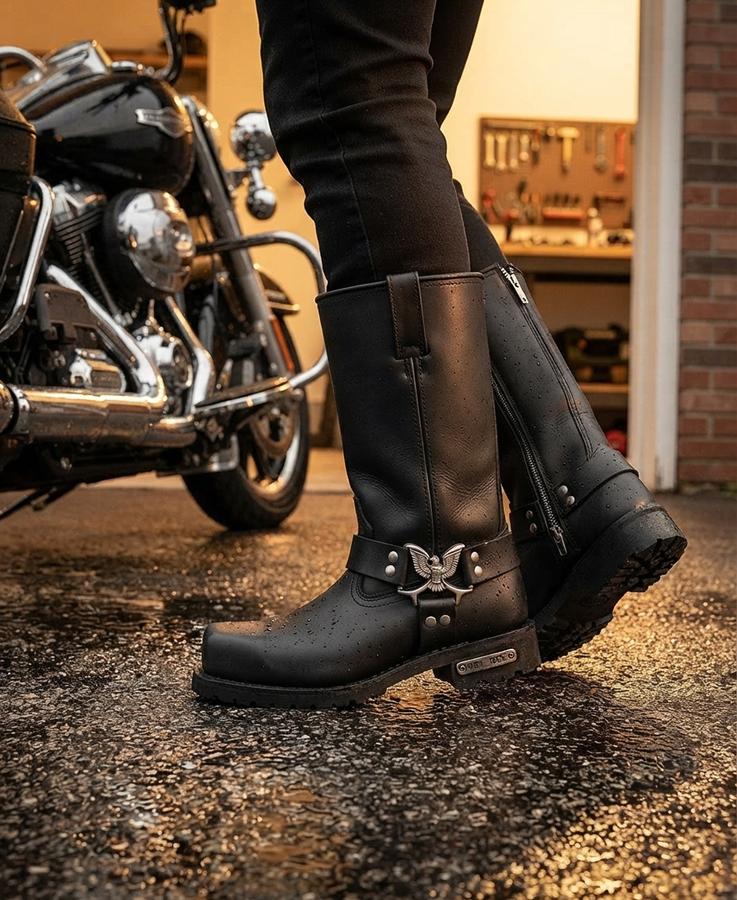
Set the O-ring ankle strap once for the sock you ride in and the 11-inch shaft holds that fit for months without re-adjusting. Goodyear welt stitching joins the sole to the upper through a leather welt, which is why a cobbler can cut a flattened tread free after two-plus years and stitch a new one on. Where a cemented budget boot delaminates at the toe and goes in the bin, this one goes back on your foot. 2,614 verified reviews average 4.4 stars, the heaviest volume in the range, with a 30-day retailer return window behind it.
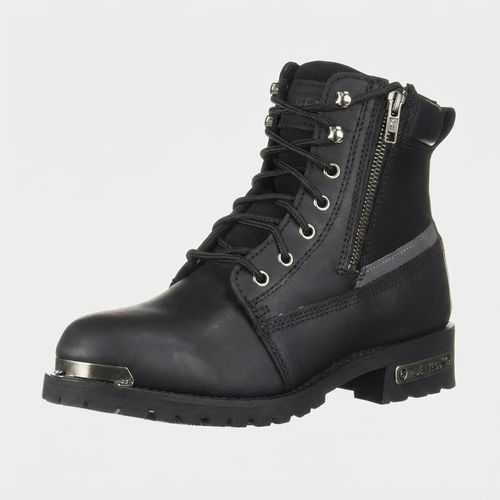
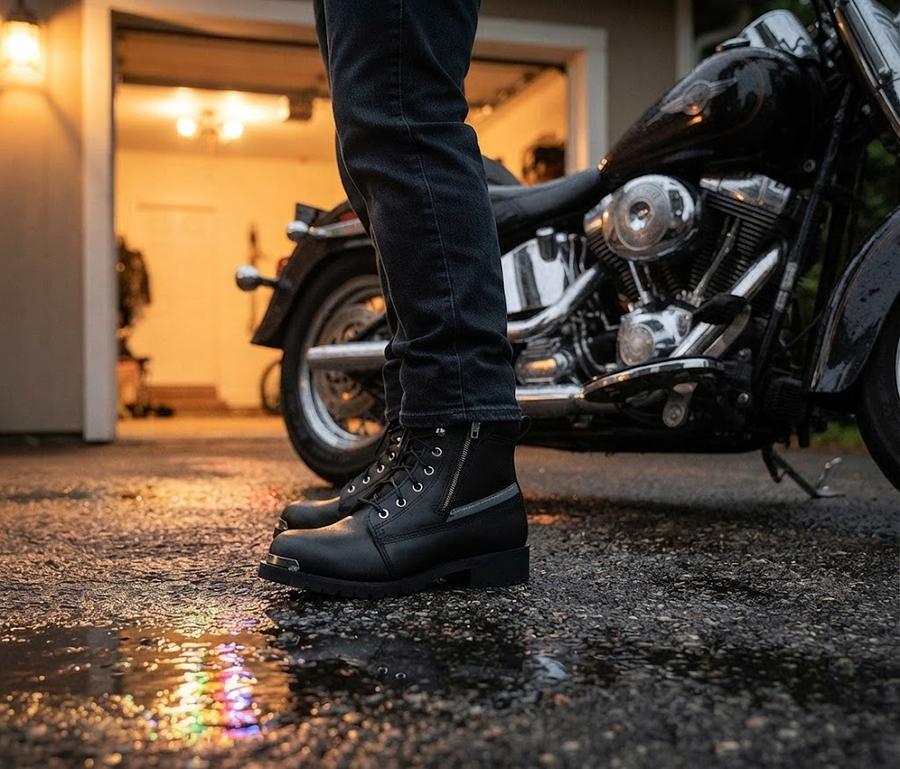
Ride home after dark and the reflective panel picks up headlights from behind while a zipper on each side gets the boot off at the door. Pull both zip tracks and each carries half the shaft tension, so neither binds halfway up the calf after a wet month of daily commutes. Where a plain black riding boot disappears at dusk, ride this one past a following car and the panel answers a headlight from fifty yards back. Check the fit over a winter sock in week one; 227 verified reviews average 4.2 stars, and a 30-day retailer window covers a swap.
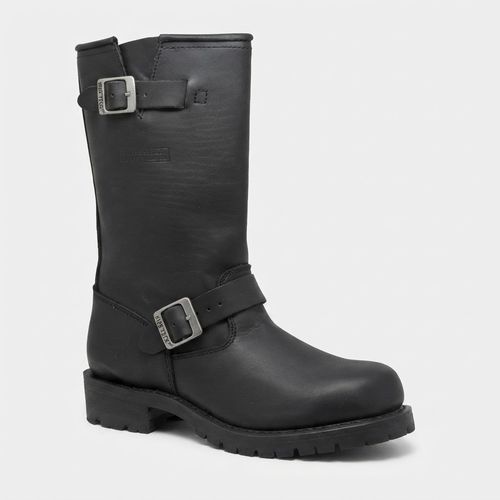
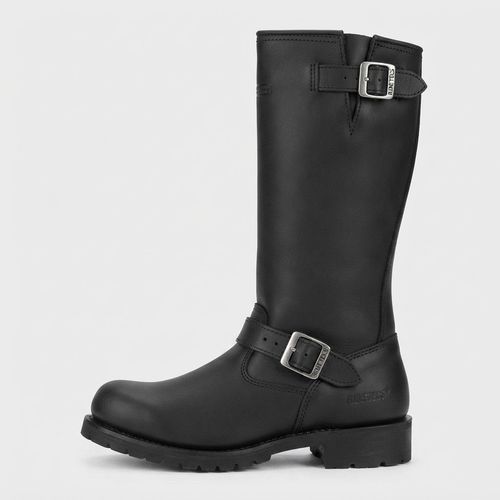
Buckle two adjustable straps across a 13-inch shaft on the first morning and set the calf where it actually fits, instead of forcing a fixed circumference over your leg. The split shaft opens under those straps, so an extra-wide calf gets room a sewn shaft cannot give, and the plain soft toe slides under a gear-shift lever at every stop light. Where a standard shaft binds by the second mile, loosen a strap at the next light and ride on. Loosen both straps at the door after a long ride and the split shaft drops off a swollen calf in seconds; 1,403 verified reviews average 4.3 stars, and returns run 30 days through the retailer.
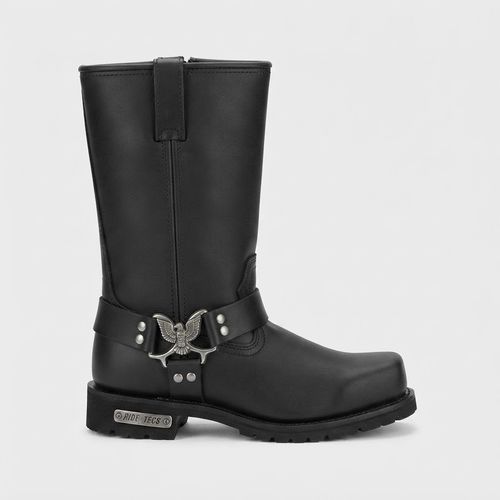
Pull the side zip and step out of the boots at the door in the time a lace-up takes to loosen one row of eyelets. Full-grain oiled leather on the upper takes the top layer of the hide, so the vamp creases to your foot over the first week instead of stiffening into a shape that fights it. Where a fabric-backed veneer upper flakes at the crease by the second winter, this one glosses. Brush and damp-wipe every 8 to 12 weeks to keep it that way. Mid-tier build, 30-day retailer return window.
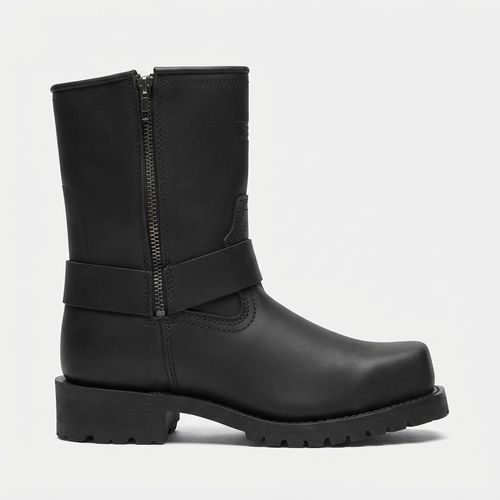
Zip a 7-inch shaft on for a 20-minute commute and walk into work without a tall biker shaft bunching your jeans at the knee. Thumb the O-ring strap through its keeper and the short shaft adjusts like the tall builds, over a cushioned insole that dries between August rides. Where a tall engineer boot is overkill for a city run, pull this pair on over jeans and walk out in the same minute. Break it in over a few evenings indoors, as riders advise, then use the retailer's 30-day window if the toe runs narrow.
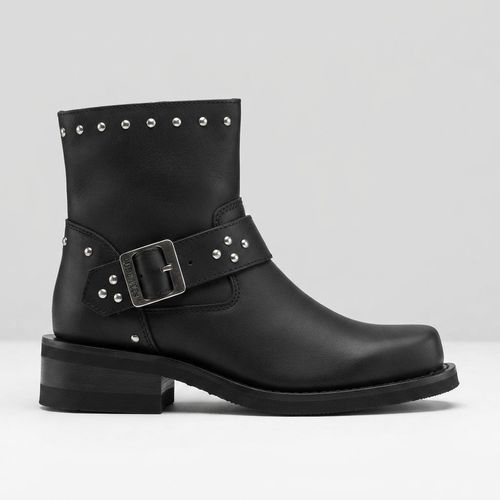
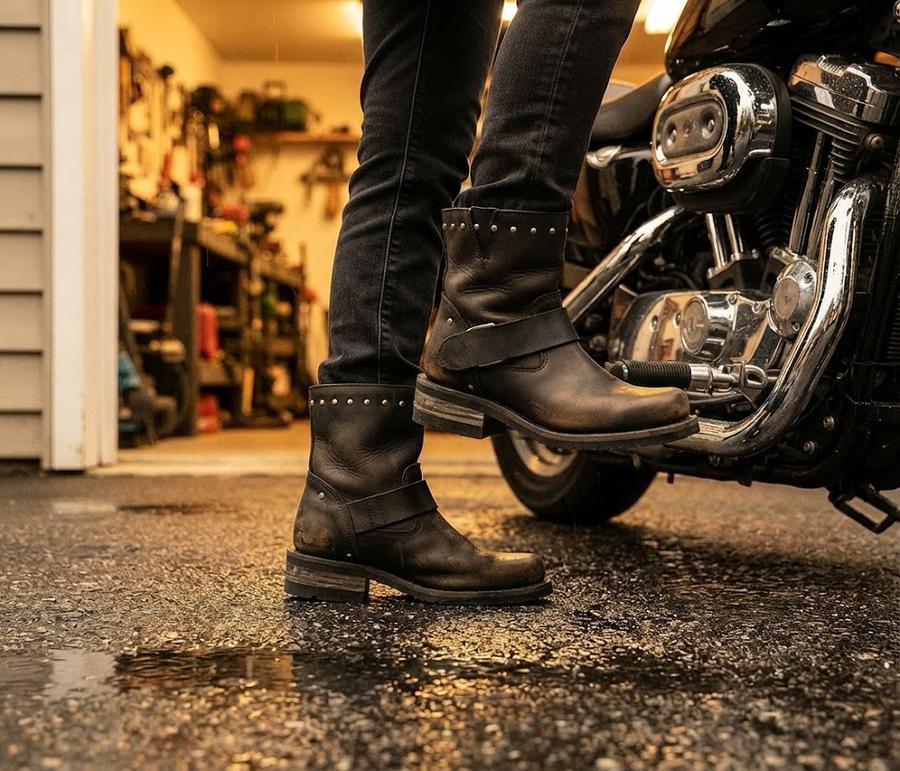
Zip the ankle bootie on for a Saturday grocery run and you ride in full-grain leather on a women's last, with a buckle strap and a side zipper instead of the lighter material that pushed you into men's boots. Flex the toe box at every stop light for a season and the reinforced stitching holds the upper to the outsole instead of opening at the crease. Where a fashion ankle boot slides on a wet pump island, step this one onto the same February forecourt and the oil-resistant rubber holds. Ride home after dusk and the reflective metal eyelets catch a headlight from behind. Wear it for 20-minute errand rides through the first month and send it back inside the retailer's 30-day window if the toe box pinches.
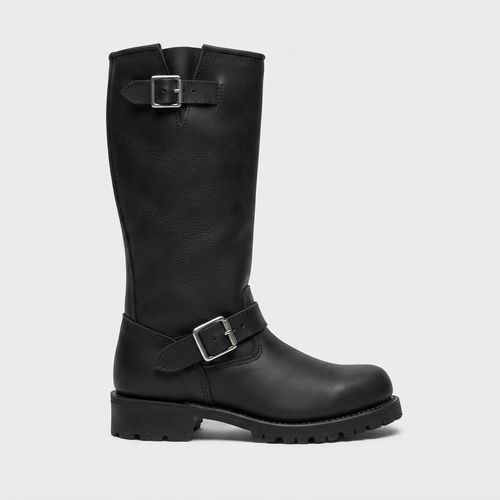
Buckle the vamp strap and the side ankle strap before a four-hour highway run and a 16-inch engineer shaft sets to your leg from instep to calf, no slack left at the knee. Open the split panel under those straps and a wide calf gets room a zip track never gives. Hook the plain soft toe under the shift lever at every light and it sits flat over the 1.5-inch heel. Where a zip boot binds on a grit-packed track by February, thumb these two buckles open with a glove on and nothing jams. Ride the tallest shaft here over a winter sock in week one; the retailer's 30-day window covers a swap if the calf runs tight.
Pricing and stock live on the retailer's product page and change without notice.
Check a shaft height in inches, an 8-to-12-week oiling interval, and a per-boot weight before you order, not after the box arrives.
| Spec | What it gets you on the road | Source |
|---|---|---|
| 7 in to 16 in | Zip a 7 in boot on for the morning commute, or step into a 16 in engineer shaft when highway exhaust heat cooks your shin on a four-hour run.Read three fit guides on shaft height and you finish all three without an inch number to order against. | Manufacturer spec across the range |
| 8-12 weeks | Wipe the oiled hide with a damp cloth every 8 to 12 weeks and the leather stays supple through a full season instead of cracking at the ankle crease.Follow a condition-as-needed instruction and you are guessing at week six, with no interval named anywhere on the page. | Manufacturer care instructions |
| 2-2.5 lbs per boot | Cross a rest-stop lot at 2 to 2.5 pounds per boot, light enough to keep pace without the drag of a full armoured touring boot.Riders ask whether these walk heavy across a rest-stop lot, and a per-boot weight rarely appears on the page they are reading. | Manufacturer package spec |
| 2+ years | Commute daily and run weekends for two-plus years before the tread flattens under the ball of your foot.Other pages print the word resoleable and leave you guessing how many winters the original sole lasts first. | Owner reports |
| 4.3 stars / 5,291 reviews | Riders who threw out cracked veneer boots left 5,291 verified reviews averaging 4.3 stars, spread across short zip boots and tall engineer builds.Scroll a no-name boot page and you rarely find a verified review count anywhere near five thousand. | 5,291 verified buyer reviews |
Wet pavement, a sole worn flat at 24 months, a gear-shift lever, and a door you want the boots off at.
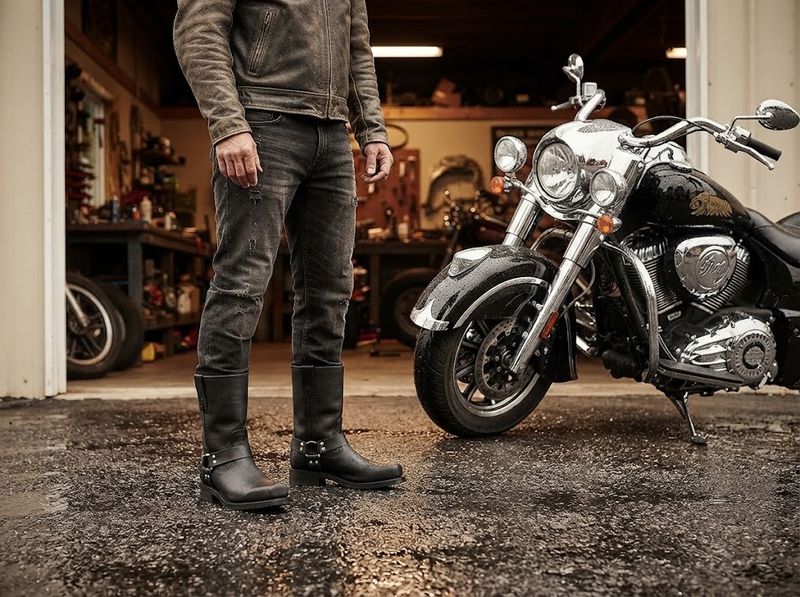
Goodyear welt construction stitches the outsole to a leather welt rather than gluing it, which is why the harness and engineer builds still take a resole after 2 years of daily riding. Run a thumbnail across the tread at the two-year mark and you still find lug depth, while the heel block has gone smooth under the shift lever. Carry the pair into a cobbler's shop on a Saturday, pay for fresh tread, and ride out the next week on the upper your foot already shaped over two winters.
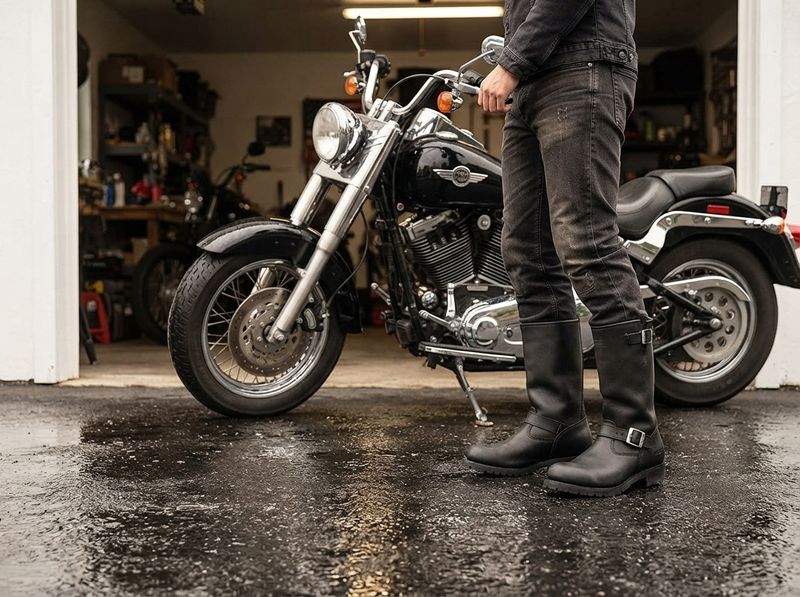
The oil-resistant rubber outsole keeps its grip through a 20-minute rain ride and across the light engine-oil film that pools around a pump island. Riders in the verified reviews describe crossing ice without slipping. A smooth leather sole glazes over on that same surface, which is why nearly every build here runs the rubber compound instead.
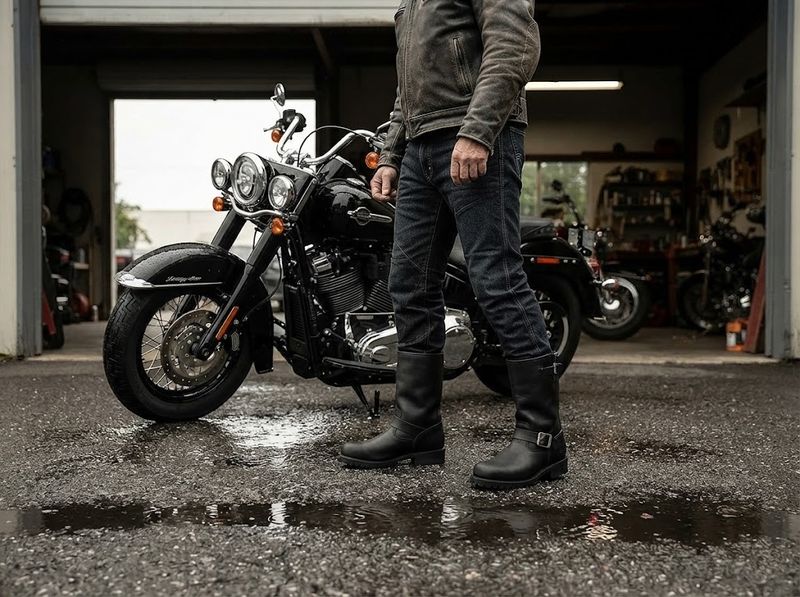
A soft square or plain toe keeps the vamp low enough to slide under a gear-shift lever a few hundred times on a 4-hour run. Riders feel every extra millimetre of bulk down there. Nothing in this line carries a steel toe cap, and that is exactly why the profile stays thin.
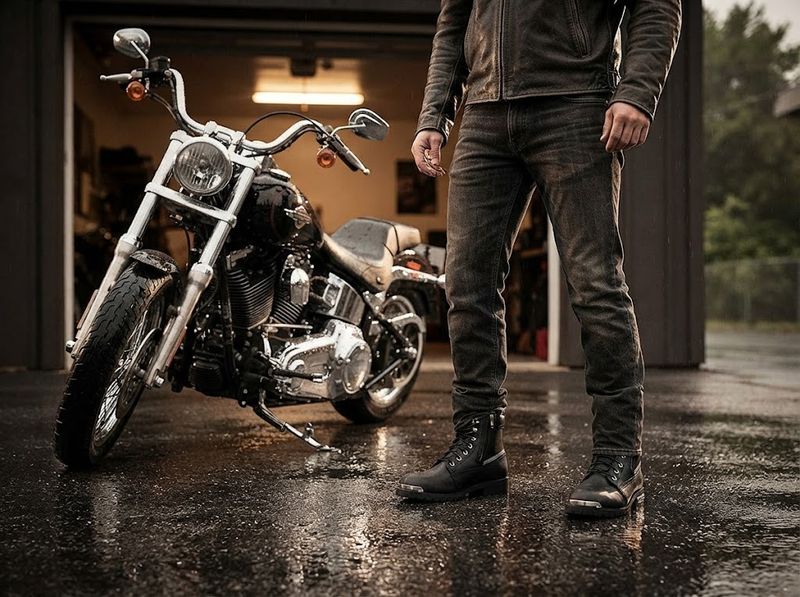
The O-ring ankle harness strap cinches the shaft above the ankle and holds a single setting through 6 months of riding, while the zipper does the actual opening. Set it once for a thick winter sock and leave it there. On the engineer builds an adjustable vamp strap and calf buckle replace the O-ring, which is how the extra-wide calf build adapts to a leg a standard shaft binds on.
Every model starts as full-grain oiled leather, the strongest layer of the hide. Bonded veneer boots split at the ankle crease by month eight. Pick your shaft height: a 7-inch zip boot for the daily commute, or a 16-inch engineer boot when highway exhaust heat hits your shin. Harness, engineer, and side-zip builds all run the same grippy oil-resistant sole. Check today's price on the style you ride in.
RIDETECS boots draw sizing complaints in the verified reviews, and several builds genuinely run narrow through the shaft and the toe box. The extra-wide calf engineer build exists for exactly that reason. Measure your calf before you order, and treat the retailer's 30-day return window as part of the fitting process.
What does not vary is the hide. Every build carries full-grain oiled leather, from a short 7 in zip boot through a 16 in engineer shaft, across men's harness and engineer cuts plus one women's ankle bootie. Harness, engineer, and side-zip name the closure and shaft you get, not a quality tier.
One rider had been buying bonded 'leather-look' boots and watching them split at the ankle by the second winter. He moved to the 11 in harness boot with the O-ring strap and rode it through two years of daily commutes. The leather scuffed, the tread wore, neither cracked through.
That is the trade in front of you. You oil a heavier leather motorcycle boot four or five times a year instead of replacing a light one every eighteen months.
Read the full brand storyBreak the leather in, oil it every 8 to 12 weeks, and resole the welt instead of rebuying.
Measure your calf, then order; several builds run narrow through the shaft.
Wear them around the house for a few evenings before a long ride.
Brush caked dirt off, wipe with a damp cloth, dry away from a heater.
Once the tread wears flat past year two, the Goodyear welt is what makes a resole possible instead of a rebuy.
Riders who bought a pair, wore them through a season, and came back to say how the leather and the sole held up.
★★★★★
Two winters in and they still read close to the day the box opened. The soles picked up scuffs, nothing structural, and the tread has never let go on me, not even crossing a patch of ice in a parking lot. The leather is thick but stays soft, so it never chewed at my calves the way a stiff shaft does. I stood around a rally most of a Saturday in these with no ache by evening.
★★★★★
My old riding boots were sold as leather and turned out to be a thin veneer over canvas that separated at the crease. These are heavy full grain, oiled, and comfortable to walk in after I get off the bike. True to size for me at a 10, and the harness strap sits where I set it. Two years of commuting on them now and the only work they have needed is a wipe-down every couple of months.
★★★★★
I ride my own bike and I was tired of women's boots built from lighter material that give out before a season closes. These take the same rubber outsole as the men's builds and the buckle strap holds through a full day of errands. The ankle sits high enough to keep road grit off, and I have had no slip stepping down onto wet pavement at the pump.
★★★★☆
The two straps are what sold me. My calf runs wide and a fixed shaft either binds or gaps, while these buckle down to a setting that stays put. They came stiff through the vamp and took about five evenings around the house before the crease went where my foot wanted it. Heavy boots, and that is the point when hot pipes sit beside your leg for four hours.
★★★★☆
Order your usual size and go half up if you ride in a thick sock, because the toe box runs snug out of the box. Once broken in they are the most comfortable pair I have owned for the money. The side zip means I am out of them at the door in seconds instead of picking at knots on the step after a long ride.
★★★★☆
Three years on this pair. The zippers still run clean and I am on the original laces. I did take them to a cobbler around year two for fresh heels, which is the whole reason I bought a stitched sole instead of a glued one. The tread still has depth and nothing leaks. The finish on the toe has flecked in spots, which is my only real complaint.
★★★★☆
I wanted a shorter shaft for a stop-and-go commute and this is it. Zip them over a work sock at seven in the morning, ride twenty minutes of traffic, and walk into the office without changing shoes. The plain toe slides under the shift lever without me hunting for it, which the bulkier boots I tried never managed.
★★★★★
Booted riders do not spend all day on the bike, so I walked these for a few hours before the first long run. Fit, build and the ankle support all came out where I hoped. On a four-hour leg the tall shaft keeps exhaust heat and road rocks off my shin, and I still crossed a rest-stop lot afterwards without feeling like I was hauling weights.
Unbox tonight, break the vamp in over 5 outings, oil at week 8, and resole somewhere past year 2.
Day 1
Pull the boots out of the box and walk the house for an hour. Stiff through the vamp is normal; a shaft that binds your calf is not, and the retailer's 30-day return window covers that call.
Week 1
Wear them on grocery runs and 20-minute errands for a week before you commit to a four-hour ride. The vamp creases to your foot around the fourth or fifth outing, and the heel counter stops rubbing.
Month 2
Brush the caked road grit off, wipe the leather with a damp cloth, and let it dry overnight away from a heater. Ten minutes at the kitchen table covers the whole 8-to-12-week routine.
Year 2+
Ride the same pair to work through a third winter and the tread finally flattens under the ball of your foot. A resole then keeps the upper you already shaped to your foot, instead of starting a new break-in out of a fresh box.
Ready for Day 1? Measure your calf, then pick a shaft height and check today's price.
The rider replacing a pair cracked at 18 months, the daily commuter, the tourer, and the woman sized out of men's boots.
A boot that photographed like leather delaminated at the ankle crease by winter two, which is why you are reading spec lines now instead of product photos. Scuff a full-grain upper against a peg through the same two winters and it darkens instead of flaking off in sheets. Ride the same pair through a third winter and the upper is still the one you broke in, not a replacement you are shaping from scratch.
Push two hundred gear shifts through a day of commuting and a boot that fights your instep leaves your arch aching by the ride home. The soft square toe slides under the lever, the flat outsole sits square on the peg, and the side zip gets the boot off at the door in seconds.
A 16 in engineer shaft puts full-grain leather between hot pipes and your leg for the whole run. Weight stays near 2.5 pounds per boot, so walking a rest-stop lot afterwards is not a penalty you pay twice.
Women riders in these reviews describe pulling on a women's boot built from lighter material and watching it give out before one riding season closed. Buckle the ankle bootie on for a Saturday errand run and you get the same rubber outsole as the men's builds, cut on a women's last rather than a scaled-down men's pattern.
Cracked veneer by month 8, a shaft that binds a wide calf at the first stop light, a zipper jammed with winter salt, and the CE rating these boots skip.
Full-grain upper on every build
Bonded 'leather-look' uppers glue a paper-thin veneer to a fabric backing, and the ankle crease is where it lets go first, usually inside two winters. Run a thumbnail along a full-grain upper after two winters and you feel one piece of hide, no bond line waiting to lift. Scuff it against a peg for a season and it darkens instead of flaking off in sheets.
Pull a 10.5 over the thick sock you actually ride in and several builds pinch through the toe box; reviewers say plainly that a 10.5 wide is the size that fits. Buckle the 13-inch engineer build over a wide calf and two adjustable straps take up the difference a fixed shaft never could. Measure the widest point of your calf with a soft tape, then compare it against the shaft spec before you order.
Zip teeth pack with grit after a month of winter salt, and the track binds halfway up the shaft while you stand at the door. Run a brush down the track when you brush the leather every 8 to 12 weeks. Step into an engineer build instead and there is no zip track to pack, just two straps you buckle at the kerb.
No EN 13634 rating in the source data
Go looking for an EN 13634 / CE label on the box and you will not find one, nor a rigid ankle cup or a shin plate inside the shaft. Ride track days or sport-tour twice a month and that limit costs you the armour that matters, so buy a certified touring boot instead of these. What you do get is a 16 in full-grain shaft standing between a hot exhaust pipe and your shin for a four-hour run.
30-day retailer return window
Search the box and the spec line for a published manufacturer warranty and you find none; inventing one here would be a lie. What you can act on is the retailer's standard 30-day return window, counted from the day the box lands. Ship the pair back inside it if the shaft binds or the toe box pinches, then reorder a wide. Measure first, wear them around the house for three evenings, and that window rarely gets used.
The questions riders send before ordering, answered against the spec sheet and the verified reviews.
Three things separate them: a taller shaft that shields the shin from exhaust heat and road debris, an oil-resistant sole that grips a fuel-stained pump island, and a low toe profile that slides under a gear-shift lever. A work boot optimises for a steel toe and a ladder rung. A dress boot optimises for a smooth sole. Neither is built around a foot peg.
RIDETECS is a full-grain leather motorcycle boot line covering harness, engineer, and side-zip styles. Shaft heights run from a short 7 in commuter boot to a 16 in engineer build, at a 4.3 average from 5,291 verified reviews.
Sneakers and work boots leave the ankle bone and shin exposed to a hot exhaust pipe and to whatever the front tyre kicks up. A full-grain leather shaft puts several millimetres of hide between your leg and both. On a 20-minute commute the difference rarely shows. On a four-hour highway leg with pipes beside your right shin, it does.
An engineer boot closes with an adjustable vamp strap and a calf buckle over a split shaft, with no laces and usually no zipper. A harness boot adds the O-ring ankle strap that gives the style its name, often paired with a side zipper for getting in and out. Engineer builds generally run taller and adjust wider at the calf.
Street and touring riders replacing a boot that cracked, commuters working a shift lever daily, and riders who want a leather boot they can wear off the bike without changing shoes. They are not built for track days or certified sport-touring: nothing in the line carries an EN 13634 / CE armour rating, a rigid ankle cup, or a shin plate.
A cowboy boot pairs a smooth leather sole with an angled heel, and both work against you on a wet pump island and on a foot peg. A fashion ankle boot usually glues a thin veneer to a fabric backing that splits at the crease. Riding boots swap in a flat oil-resistant rubber sole and a full-grain upper for exactly those reasons.
Read three lines on the spec sheet. Upper: full-grain means the top layer of the hide, while 'genuine leather' sits two grades below it. Construction: a Goodyear welt can be resoled, a cemented sole cannot. Sole: oil-resistant rubber grips a fuel-stained surface, smooth leather does not. Certification, where it exists, gets stated as EN 13634 / CE with a level.
Shaft heights span 7 in at the short end to 16 in at the tall end. A 7 in shaft sits just above the ankle bone and disappears under a straight jean leg, which suits a short commute and an office arrival. An 11 in harness shaft covers most of the calf and is the volume seller in the range. A 13 in or 16 in engineer shaft reaches high enough to sit between hot exhaust pipes and the shin on a long run, and both adjust at the calf with buckle straps rather than a sewn circumference.
Full-grain oiled leather, on every build in the line. Full-grain is the outermost layer of the hide, the one with the tight fibre structure, and it is why the vamp creases rather than flaking. Bonded or 'leather-look' uppers glue a thin veneer to a fabric backing, and that bond line is what fails at the ankle crease.
An oil-resistant non-slip rubber outsole, which is what nearly every build here runs. Rubber compounded for oil resistance does not swell or glaze when it meets engine oil or fuel drips, so the tread blocks keep their edges. It is an unbranded compound rather than a named one such as Vibram, and that is a real difference from premium touring boots.
Roughly 2 to 2.5 pounds per boot. Shaft height and build account for the spread. That is heavier than a sneaker and noticeably lighter than a full armoured touring boot with a rigid ankle cup and shin plate. Walking a rest-stop lot or a supermarket aisle in them is comfortable; running for a train in them would not be.
The welt appears on the harness and engineer builds rather than across the whole line, and that is where the resole path comes from. Check the spec line for the specific boot before you count on a cobbler resole. Where the welt is present, the sole is stitched to a leather welt strip rather than glued, so cutting it free leaves the upper intact.
The toe is a soft square or plain toe, with no steel cap and no reinforced box. That is a deliberate trade for shift feel: a steel toe adds height and stiffness right where the vamp needs to slide under a gear-shift lever. If a job site requires a safety toe, this is not the boot for it.
Three, and which one you get depends on the build. A full-length side zipper runs the shaft on the zip models and opens it wide enough to clear a thick riding sock. An O-ring ankle harness strap cinches above the ankle as a fit adjustment. Engineer builds use an adjustable vamp strap plus a calf buckle over a split shaft, with nothing to jam.
One women's build ships in the line: an ankle-height bootie with a buckle strap, a side zipper, and the same oil-resistant non-slip rubber outsole as the men's riding boots. Reinforced stitching runs from the upper to the outsole. It sits at ankle height rather than mid-calf, so it suits errands and short rides more than a long touring leg.
The 11 in harness boot with the O-ring ankle strap, at 2,614 verified reviews averaging 4.4 stars. The 13 in engineer boot follows with 1,403 reviews at 4.3 stars, and the 16 in side-zip boot carries 969 at 4.3. Newer builds sit in the double or single digits, too thin a sample to read a fit pattern from.
The double side-zipper riding boot carries a reflective panel, and the women's ankle bootie uses reflective metal eyelets. Everything else is plain black leather. If night visibility matters on your commute, start with the reflective build.
Oiled full-grain leather is water-resistant, not waterproof. It sheds a 20-minute shower and turns dark, and it will soak through in a sustained downpour, because no Gore-Tex-style membrane or sealed seam sits anywhere in this line. Dry them slowly away from a heater afterwards, oil them the following week, and the hide comes back supple.
Low and blocky rather than angled, which is what keeps a boot from sliding off a foot peg. The tall engineer build runs a 1.5-inch heel. None of them use the sharply angled cowboy heel that catches on a peg edge.
No EN 13634 / CE certification is listed for any build in this line, and no rigid ankle cup or shin plate is fitted. What the boots carry is a tall full-grain leather shaft and an oil-resistant sole. For track-day riding or certified sport-touring protection, look at brands that publish an EN 13634 level, such as TCX, Alpinestars, or Dainese.
No manufacturer warranty term is published for this line, and inventing one here would be a lie. The backing that does exist is the retailer's standard 30-day return window, which covers the fit problems behind most returns on these boots: a shaft that binds a wide calf, a toe box that runs narrow through the forefoot. Treat the first 30 days as the fitting period. Wear the pair indoors on carpet for a few evenings, check the calf and the toe before the first ride, and the window stays open if either one is wrong.
Standard retailer returns apply. Start the return inside the 30-day window, ship the pair back, and reorder the size or the extra-wide build. Wearing them indoors on carpet keeps them returnable, so run the calf check before the first ride. The 13 in engineer build with two adjustable buckle straps is usually the answer for a wide calf.
The weighted average across the line is 4.3 stars from 5,291 verified buyer reviews, but that number is not evenly distributed. Two builds carry over 1,400 reviews each and are worth reading closely. Three carry fewer than 20 between them, and a 5-star average on two reviews tells you almost nothing. Weight the volume, not the star count.
Every spec quoted here comes from the manufacturer's own product data: upper material, closure type, construction, outsole, shaft height, and weight. Where that source data is silent, this page says so rather than filling the gap. No certification rating, no warranty term, no metal shank, and no named outsole compound appear anywhere in it.
Full-grain oiled leather is what the manufacturer specifies on every build, and verified reviewers repeatedly describe the smell and thickness of top-grain hide out of the box. What no page can do is grade a hide for you. The check you can run yourself: full-grain darkens and glosses with wear, while a bonded veneer flakes at the crease.
These sell online through the retail product pages linked on this site, which is also where current pricing and stock live. Prices move, so that page is the only accurate source. Sizing varies by build, so read the fit notes on the specific boot before ordering rather than assuming your size carries across the whole line.
Shipping is handled by the retailer, so terms follow whatever the product page shows at checkout for your address. No shipping policy sits in the manufacturer's data. Read the return terms for your region at the same time.
A shaft that fits does not rub; one that binds will, and that is the most common fit complaint across these reviews. Split-shaft engineer builds with buckle straps let you set the calf circumference, which is the fix rather than the workaround. The 11 in harness shaft sits lower and clears more calf shapes than a taller engineer shaft does. Measure the widest point of your calf against the shaft circumference before ordering, and run the first hour indoors so the return window stays open if the shaft still bites at the top.
Grit in the zipper track is the failure mode to watch on the zip builds, especially after a salted winter. Run a brush down the track when you brush the leather every 8 to 12 weeks and it stays clear. If that is a risk you would rather not own at all, the engineer builds close with straps and buckles and have no track to jam.
Order your normal boot size and try it over the sock you actually ride in. Several builds run narrow through the toe box rather than short, so a wide in your usual size solves more fit problems than going up a full size. The side-zip builds open the shaft wide enough that sock thickness rarely blocks entry.
Soaked full-grain leather stiffens as it dries, and drying it fast is what cracks it. Pull the insoles, stuff the boots with newspaper, and let them dry at room temperature away from a radiator or a heater vent over a day or two. Wipe with a damp cloth and oil them once dry, and the hide returns supple.
The square toe is soft and low, with no steel cap raising the vamp, so it slides under a shift lever without you lifting your whole leg. Riders coming from a race boot with a sculpted shifter pad will find it less precise.
At 2 to 2.5 pounds per boot, a gas-station lot or a supermarket aisle is comfortable, and multiple reviewers describe wearing them all day. The cushioned insole and breathable lining carry that. What they are not is a walking boot: the flat sole gives no arch support, and riders who walk miles usually drop in an aftermarket insole.
A tall engineer shaft gets worn under jeans by some riders and over them by most, because straight-leg denim bunches badly at the knee over a tall shaft. Boot-cut jeans go over cleanly. The short and mid-height builds sit low enough that a standard jean leg falls over them without bunching at all.
Plain black leather and a flat rubber sole read as boots rather than gear, which is why riders wear them into an office or a hardware store without changing. The soft toe means they are not job-site safety footwear. On a warehouse floor or a ladder, a rated safety toe is the requirement, and nothing here carries one.
Full-grain leather abrades and darkens over years, while synthetic uppers on cheaper boots delaminate at a bond line, usually at the ankle crease. Premium synthetic touring boots are a different case entirely, with certified armour and moulded plates that leather cannot match on impact. The trade is impact protection against abrasion life and a resole path.
Construction overlaps: both routes use full-grain uppers and Goodyear welt stitching, and both resole. Premium heritage brands generally run thicker leather gauges, more hand-finishing, and a longer build tradition, and they price accordingly. These sit in the entry-to-mid tier of leather riding boots. If a resoleable full-grain boot is the requirement, either route gets you one.
For street riding at commuting speeds, a full-grain leather shaft plus an oil-resistant sole covers the common cases: exhaust heat against the shin, road debris off the front tyre, a foot down on a slick surface at a pump island. For track days or sustained sport-touring, certified armour is the requirement, and no amount of leather substitutes for an EN 13634-rated ankle cup or a shin plate. Match the boot to the riding you actually do. A commuter who buys race boots walks badly all week; a track rider who buys leather harness boots is under-protected where it counts.
A women's last runs narrower through the heel and forefoot and sits differently at the instep, which is why some women riders end up in men's boots that fit long and loose. One women's ankle bootie ships in this line on a women's last with the same oil-resistant sole as the men's riding builds. The men's builds run to men's sizing only.
The dividing line is construction, not brand. A Goodyear-welted sole gets cut free and stitched on again by any competent cobbler, whether the boot is premium or mid-tier. A cemented sole, common on budget boots, cannot: the glue bond fails and nothing remains to stitch to. Check for a welt before you assume a resole is possible.
Wear them indoors for a few evenings before the first ride. Full-grain leather creases to your foot over roughly the first week of regular wear, and the heel counter stops rubbing once the vamp has taken your shape. Do not soak them or force the break-in with heat, because both shorten the working life of the hide.
Brush caked dirt off, wipe the leather with a damp cloth, and re-oil every 8 to 12 weeks. That interval keeps the hide supple through a riding season instead of letting it dry and crack at the ankle crease. Let them dry at room temperature away from a heater, and store them upright rather than folded over at the shaft.
On the Goodyear-welted builds it is literal. The welt is a leather strip stitched to the upper and to the sole, so a cobbler cuts the sole stitching, removes the tread, and stitches a new sole to the same welt. Owners report reaching that point after two-plus years of daily riding. On non-welted builds, a resole is not practical.
The O-ring strap sits above the ankle as a fit adjustment and carries no load when you walk, so it holds its setting for months. Re-set it once after the break-in period. Hardware failure on the ring itself is rare in the reviews.
Owners riding daily commutes report two-plus years before the tread flattens enough to matter, with the upper scuffed rather than cracked. The sole goes first, which is the point of the welt: the boot is at its most comfortable exactly when the tread wears out. A resole resets the clock without giving up the broken-in upper.
Shaft heights, closures and sole patterns side by side. Select a photo to open it larger.
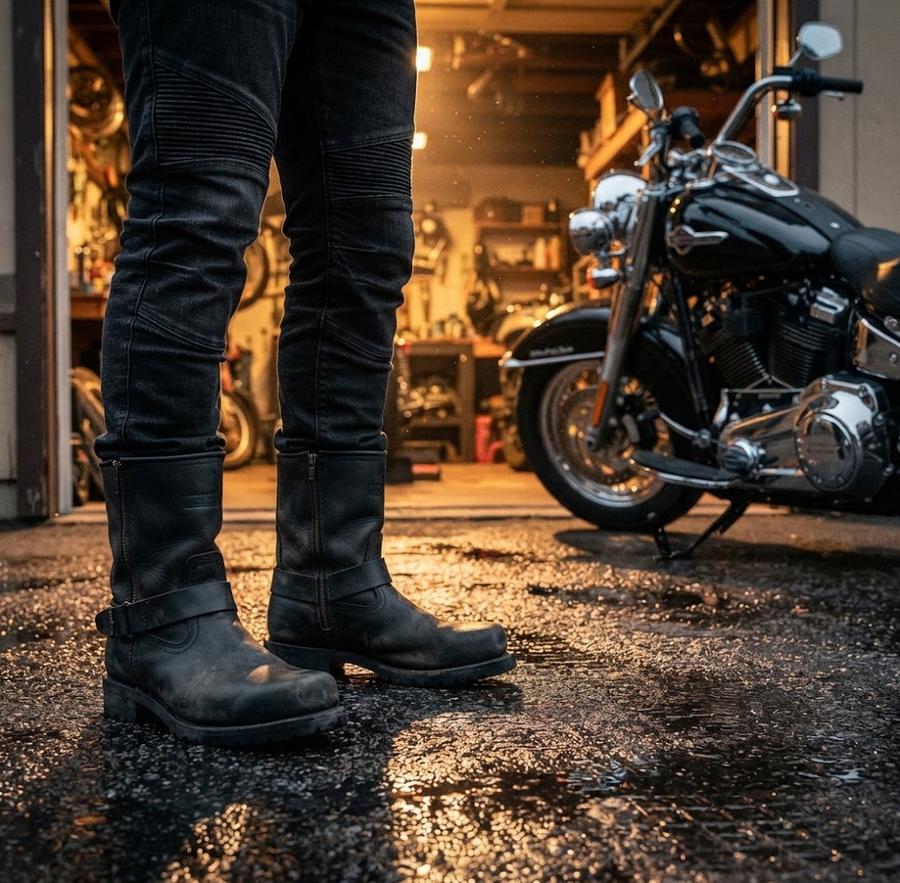
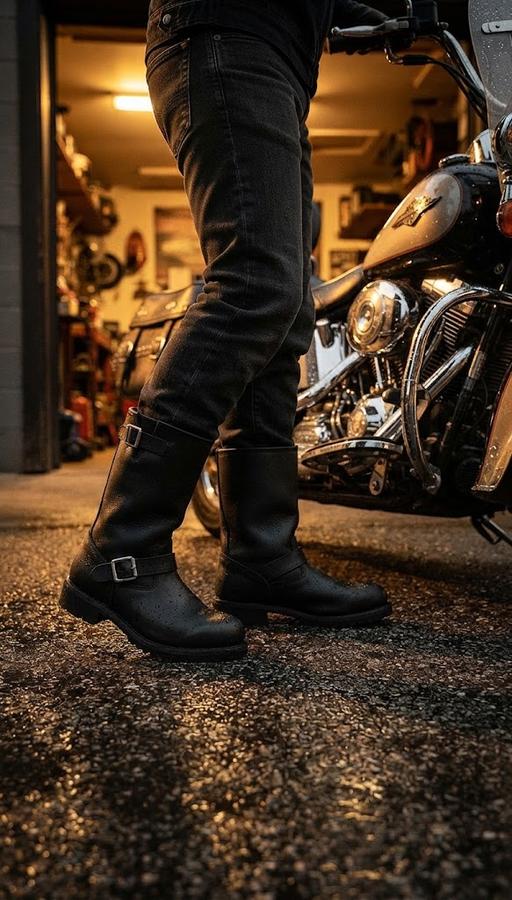
Shaft heights, calf measurements, and the break-in routine in one page, plus a note when a new build ships.
No spam. Unsubscribe anytime.
RIDETECS full-grain riding boots — prices update daily, check today's price
Pick a shaft height